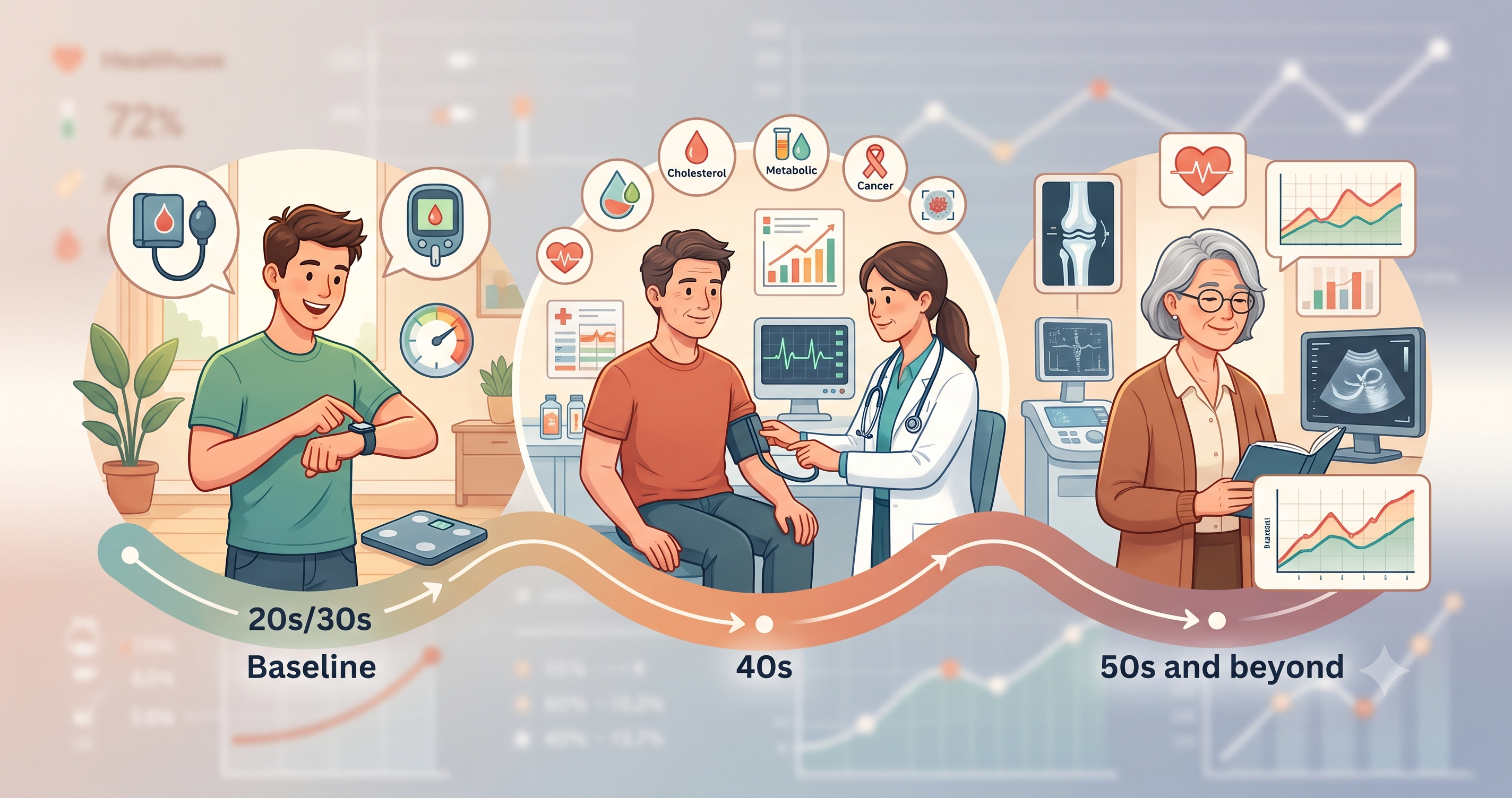
Preventive Health Screening by Age: A Decade-by-Decade Guide
Preventive health screening needs change significantly by decade — what matters most in your 20s is establishing a baseline, while your 40s and beyond shift toward more frequent cardiovascular, metabolic, and cancer screening. A single generic checklist doesn't reflect that shift, which is why "screening by age" is worth understanding as its own topic rather than one line in a broader list.
In Your 20s: Build the Baseline
Most 20-somethings feel screening doesn't apply to them yet — and in terms of urgency, that's often true. But this decade has a different job: establishing what "normal" looks like for you specifically.
- Baseline bloodwork — cholesterol and glucose levels
- Blood pressure check every 1–2 years
- Baseline weight, BMI, and body composition
Without a baseline, an abnormal result later in life has nothing to compare against. This is the decade to start tracking, even when everything looks fine.
In Your 30s: Stay Consistent, Watch for Family History
The 30s often bring the first real risk signals, especially with a family history of chronic conditions. Continue the same core screenings from your 20s, but increase frequency if you have any family history of heart disease, diabetes, or certain cancers — screening often needs to start earlier in those cases than general guidelines suggest.
In Your 40s: The Screening Load Increases
This is typically where preventive screening becomes more comprehensive:
- Annual blood pressure and metabolic screening
- Cholesterol panels, more frequently than in your 30s
- The start of most standard cancer-screening schedules, depending on sex and family history
The 40s are also when the case for continuous tracking — rather than a once-a-year snapshot — gets stronger. Risk factors like blood pressure and metabolic markers can shift meaningfully within a year, and an annual check alone can miss the trend.
In Your 50s and Beyond: Frequency and Depth
Screening needs typically expand further in this decade:
- More frequent cardiovascular and metabolic checks
- Bone density screening
- Continued cancer screening on a schedule set with a healthcare provider
At this stage, screening is less about establishing a baseline and more about catching change early — which makes consistent, ongoing tracking more valuable than ever.
Age Is a Starting Point, Not the Full Picture
These guidelines shift based on family history, lifestyle, and existing risk factors — someone with a family history of heart disease at 32 has a different screening need than a healthy 32-year-old with no such history. That's the limitation of any age-based checklist on its own: it's a starting point, not a personalized plan.
This is where continuous, AI-driven tracking adds real value over a static annual checklist — it can flag a trend developing between checkups, not just confirm what a single test shows once a year.
See How LIVE4WELL's Wellness AI Tracks Risk Over Time →
Frequently Asked Questions
What preventive screenings should I get in my 20s?
Baseline bloodwork (cholesterol and glucose), periodic blood pressure checks, and a baseline weight/BMI reading are the main priorities — establishing a personal baseline matters more at this age than frequent testing.
How does preventive screening change after 40?
Screening frequency typically increases after 40, with more regular blood pressure, cholesterol, and metabolic checks, plus the start of most standard cancer-screening schedules depending on individual risk factors.
Should screening frequency change if I have a family history of chronic disease?
Yes — a family history of conditions like heart disease, diabetes, or certain cancers typically means screening should start earlier and happen more frequently than general age-based guidelines suggest.